Assess Your Space
Before you buy a single organizer, you need to understand exactly what you're working with. The biggest mistake people make when trying to organize their saree collection in a small wardrobe is buying products before measuring. Grab a measuring tape and a notebook — here's what to evaluate.
Measure everything. Most Indian wardrobe shelves are 18-20 inches deep and 12-14 inches tall per shelf. A standard 3-door wardrobe gives you roughly 36-48 inches of width across shelves. Write down every dimension: shelf width, depth, height between shelves, hanging rod length, and the gap between the rod and the shelf below. If you're shopping for a saree organizer for wardrobe, these numbers determine what fits.
Identify dead space. Small wardrobes have hidden real estate most people ignore. The gap between the top shelf and the wardrobe ceiling often goes unused — this can hold stackable boxes for off-season sarees. The back of the door is prime real estate for over-door hooks or a slim hanging organiser. The floor of the wardrobe, below the lowest hanging clothes, can hold shoe-box-sized drawer units for blouses and accessories. Even the gap under your bed is valuable for low-profile storage boxes.
Audit your collection. How many sarees do you actually own? Be honest. Count them. Separate by category: daily wear (cotton, linen), work/occasion (silk blends, georgette), special occasion (silk, Kanjeevaram, Banarasi), and rarely worn or heirloom pieces. The daily wear group needs the most accessible storage. The special occasion group needs the safest storage. The rarely worn group belongs in off-season storage. This audit is the foundation of learning how to store sarees for long time — because different fabrics need different conditions.
Pro Tip
Draw a rough floor plan of your wardrobe on paper. Mark every shelf, rod, and drawer with dimensions. Take photos. Keep this on your phone — it will save you from buying organizers that don't fit. I learned this the hard way after buying a saree organizer box that was 2 inches too wide for my shelf.
Vertical Storage Solutions
When horizontal space is limited, the only direction to go is up. Vertical storage is the single most effective strategy for small wardrobe saree organization. The average wardrobe has 5-8 feet of vertical space but most people only use the middle 3 feet. That's nearly 50% wasted space.
Shelf Risers and Stackable Organizers
Shelf risers are inexpensive metal or plastic platforms that double your shelf's usable height. Place a riser on a shelf, and suddenly you have two levels instead of one. On the lower level, stack 3-4 folded sarees in a cotton organizer. On the upper level, store blouses or accessories. The IKEA VARIERA shelf riser (Rs. 399) is a popular choice — it's sturdy, adjustable, and fits standard wardrobe shelves.
Stackable fabric boxes are the workhorses of vertical storage. The IKEA SKUBB box set (6 boxes, Rs. 1,499) lets you create a tower of storage. Each box holds 3-4 folded sarees. Stack them 2-3 high on a single shelf and you've tripled your storage without adding a single inch of floor space. For silk sarees, line the inside of SKUBB boxes with a cotton cloth or use a Homestrap Premium Cotton Saree Organiser inside the box for breathability.
- Measure shelf height before buying risers — you need at least 8 inches per layer
- Use risers only for lightweight sarees — don't stack heavy silk on upper levels
- Label each box — fabric labels or chalk tags save minutes every day
- Remove before shopping — take your measurements to avoid returns
Vertical Dividers for Shelves
Adjustable shelf dividers (also called bookends on steroids) let you file folded sarees upright instead of stacking them flat. Filing upright means you can see each saree's edge at a glance — no rummaging through piles. The trick is to fold sarees into uniform widths (about 6-8 inches wide) and stand them side by side like files in a drawer. This works beautifully for cotton and lightweight silk sarees. Use 2-3 dividers per shelf to create sections for different fabric types or colors.
Hanging Organizers for Sarees
For small wardrobes, hanging organizers are a game-changer. They use vertical rod space — which is often underutilized — to store 6-10 sarees in the footprint of one. But before you buy, understand the limitations.
Good For Hanging
Cotton sarees under 600g, lightweight chiffon and georgette, daily wear sarees you rotate weekly, sarees that don't have heavy zari or embroidery.
Do Not Hang
Silk sarees (Kanjeevaram, Banarasi, Paithani), bridal sarees over 1kg, sarees with heavy zari work, any saree you want to preserve long-term.
Over-Door Hooks
Over-door hooks are the easiest hanging solution — no drilling, no permanent installation. A sturdy over-door rack with 6-8 hooks costs Rs. 300-800 and can hold 6-8 daily wear sarees. Use it on the inside of your wardrobe door or bedroom door. Each saree drapes over a hook — grab and go. Perfect for the sarees you wear most often. The key is using padded hooks to prevent crease marks on the fold point.
Cascading Hangers
A cascading hanger (also called a tiered hanger) hangs from your wardrobe rod and has 4-6 individual hooks hanging at different heights. Each hook holds one saree on a hanger. This means 5-6 sarees use the same rod space as 1. The JD FRESH cascading hanger system works well for lightweight sarees. Pro tip: use non-slip velvet hangers so sarees don't slide off.
Slim Hanging Saree Organisers
A hanging saree organiser with individual fabric pockets is the most popular space-saving solution. The JD FRESH Slim Hanging Saree Organiser has 6 mesh-window pockets and takes only 8 inches of rod space. Each pocket holds one folded saree. The mesh panels allow airflow — critical for humid Indian climates. Use this for daily wear cotton and chiffon sarees. Never use it for heavy silk — the weight stretches the fabric over time.
Space Hacks
Hanging organisers work even better when paired with a wardrobe rod extender. These hooks clip onto your existing rod and add a second rod below. Double your hanging space for under Rs. 200. Use the top rod for hanging organiser pockets, the bottom rod for cascading hangers. Two systems, one column of space.
Drawer Organization Systems
Drawers are surprisingly effective for small wardrobe saree storage — if organized correctly. A deep drawer (8-10 inches deep) can hold 8-12 folded sarees upright like file folders, plus blouses and accessories. The KonMari folding method, adapted for sarees, is the key.
KonMari Folding for Sarees
The KonMari method — folding fabric into small rectangles that stand upright — works brilliantly for sarees. Here's the adapted version for sarees: Fold the saree lengthwise into thirds (or quarters for very wide sarees). Then fold crosswise into thirds again. The goal is a rectangle roughly 6 x 8 inches that stands on its own. Stand each folded saree upright in your drawer, side by side. You can see every saree at a glance. Grab one without disturbing the rest. No more digging through piles.
This method works best for: cotton sarees, linen sarees, and lightweight silk blends. For heavy silk sarees with thick zari, fold slightly looser to avoid pressure on the metallic threads. Place acid-free tissue paper between each saree in the drawer to prevent friction and colour transfer.
Drawer Dividers
Adjustable drawer dividers turn a single deep drawer into a multi-compartment saree organizer system. Use 3-4 dividers to create sections: one for daily sarees, one for work sarees, one for blouses, one for accessories. The IKEA KOMPLEMENT drawer with dividers (part of the PAX system) is the gold standard — deep enough for filing sarees upright. But any sturdy drawer can be divided using adjustable bamboo dividers (available on Amazon for Rs. 400-800). For an affordable alternative, use the IKEA VARIERA box (Rs. 399) as individual compartments inside a shallow drawer — each box holds 2-3 folded blouses perfectly.
Blouse Organization Hack
Dedicate one drawer section (or one VARIERA box) to blouses. Fold each blouse flat, then stand it vertically like a file. Use small cardboard dividers between blouses to keep them upright. Label the top edge of each blouse with the matching saree name using a fabric pen. No more "which blouse goes with this saree" panic before events.
For those committed to learning how to store sarees for long time, drawer systems offer the best balance of accessibility and protection. They keep sarees flat (no gravity stress), allow airflow (if using breathable dividers and cotton liners), and make it easy to rotate sarees regularly.
Vacuum Storage for Off-Season Sarees
Vacuum storage bags are the nuclear option for small wardrobe saree organization — they compress fabric to a fraction of its original volume. A stack of 10 cotton sarees can shrink to the thickness of 2. But they come with serious caveats that most guides don't tell you.
When Vacuum Storage Works
Vacuum bags are ideal for cotton, linen, and synthetic sarees that you won't wear for 6-12 months. Think of them as long-term parking for off-season sarees. In a small wardrobe, freeing up even one shelf by vacuum-sealing 10-15 cotton sarees can transform your space. Store the compressed bags under your bed, on the top shelf of your wardrobe, or in a suitcase. Label each bag clearly — "Summer Cottons 2025" or "Festive Wear" — so you know exactly what's where without opening.
When to Avoid Vacuum Storage
Never Vacuum Seal Silk
Vacuum bags remove all air — including the moisture silk needs to stay flexible. Silk fibers become brittle in completely dry, compressed conditions. The pressure of compression stresses zari and embroidery. We tested a Kanjeevaram in a vacuum bag for 3 months — the zari showed visible stress marks. Silk belongs in breathable cotton or muslin organizers, never in vacuum-sealed plastic.
Also avoid vacuum bags for any saree with heavy embellishments, sequins, stone work, or thick embroidery. The compression can crush and crack embellishments. Stick to cotton, linen, and synthetic fabrics only. Even then, don't leave them compressed for more than 12 months without airing out.
Best Practice
When using vacuum bags for off-season sarees, add a silica gel packet inside each bag before sealing. Even "airtight" bags can develop minor condensation in humid climates. The silica gel absorbs any residual moisture. Replace the gel pack when you reopen the bag. This small step prevents musty odours and mildew.
Under-Bed Saree Storage
The space under your bed is one of the most underused storage areas in any Indian home. A standard bed has 6-10 inches of clearance — enough for low-profile storage boxes that can hold 15-20 sarees. This is perfect for off-season sarees, guest sarees, or the pieces you're saving for the next generation.
Choosing the Right Under-Bed Boxes
Not all under-bed boxes are created equal. For sarees, you need boxes that are: low-profile (under 7 inches tall so they fit under most bed frames), wide enough to hold folded sarees without creasing (at least 24 x 16 inches), and made of breathable material or have ventilation holes. The Homestrap Non-Woven Zip Storage Bags (3-pack) work well as under-bed storage for cotton sarees — they're low-profile, transparent, and have a zipper closure. For better airflow, use fabric storage boxes with mesh panels or drill small ventilation holes in plastic boxes.
Guest Saree Storage
Every Indian household needs a stash of "guest sarees" — those 5-8 sarees kept specifically for visiting relatives or friends who may not have brought their own. Under-bed storage is ideal for these. They don't need to be in your main wardrobe, but they need to be accessible and presentable. Store guest sarees in a dedicated under-bed box with a sachet of lavender for freshness. Include a note inside listing what's in the box — so when Auntie visits, you can pull it out in 30 seconds.
- Measure your bed clearance before buying boxes — measure from floor to bed frame bottom
- Choose boxes with lids to protect from dust and pests
- Add silica gel and neem leaves inside each box, especially during monsoon
- Label boxes clearly — use large tags so you can read them without pulling everything out
- Airtight plastic boxes need ventilation — drill small holes if no ventilation exists
Wall-Mounted Solutions
When your wardrobe is full, look at the walls. Wall-mounted storage takes zero floor and zero wardrobe space — it creates new storage where none existed. Perfect for small apartments where every square inch counts.
Wall Hooks
A row of 3-4 sturdy wall hooks can hold 3-4 daily wear sarees that you grab frequently. Mount them on a wall near your wardrobe or on the back of your bedroom door. Each saree drapes over a hook — zero folding, zero rummaging. Use wooden or brass hooks with rounded edges to prevent fabric snagging. Space hooks at least 6 inches apart so sarees don't press against each other. This is the ultimate "I'm running late" solution for your most-worn sarees.
Pegboards
Pegboards aren't just for tools — they're brilliant for saree accessories. Mount a small pegboard (18 x 24 inches) on a wall near your wardrobe. Use pegs and small shelves to hang blouses (on padded hangers), store folded dupattas, display jewellery, and hang belts or sashes. The IKEA SKÅDIS pegboard system (Rs. 999) is perfect for this — it's affordable, modular, and comes with a range of hooks, shelves, and containers. Paint it to match your room. It turns accessory storage into wall art.
Wall-Mounted Folding Racks
For the truly ambitious, a wall-mounted folding rack (like those used in retail stores) lets you display folded sarees like a boutique. These racks mount to the wall and have 3-4 fold-out arms. Each arm holds 3-5 folded sarees. When you're not using them, the arms fold flat against the wall — zero space taken. This is a more advanced solution but works beautifully in small bedrooms where you want your saree collection to double as decor.
Renter Friendly
If you can't drill into walls, use command hooks (heavy-duty, up to 4kg capacity). They hold sarees securely and remove without leaving marks. For pegboards, use a tension rod system between wall and wardrobe — no drilling required.
Capsule Saree Wardrobe System
The most effective strategy for small wardrobe saree organization is the capsule wardrobe concept: keep only 10-15 sarees accessible in your main wardrobe at any time. Everything else lives in off-season storage (under-bed, top shelf, vacuum bags). Every season, rotate. This isn't about owning less — it's about accessing more efficiently.
How to Build Your Capsule
Step 1: Choose 10-15 sarees that match the current season and your upcoming events. For summer: cotton, linen, light georgette. For wedding season: silks, festives. For monsoon: easy-care fabrics that dry fast.
Step 2: Arrange these in the most accessible parts of your wardrobe — the middle shelf at eye level, the front of your hanging rod, the top drawer. These are your "grab and go" sarees.
Step 3: Store everything else. Cotton off-season sarees go into vacuum bags under the bed. Heavy silk sarees go into breathable cotton organizers on the top shelf. Bridal heirlooms go into a premium muslin box organiser for maximum protection. Blouses stay in drawer dividers organized by matching saree.
Step 4: Every 3-4 months (or when seasons change), rotate. Pull 10-15 from off-season storage. Move the previous capsule into deep storage. Refold everything with fresh tissue paper and shifted crease lines. This rotation is an essential part of learning how to store sarees for long time — regular handling prevents any saree from sitting untouched for years.
The 10-15 Rule
Why 10-15? Because that's the maximum number of sarees a small wardrobe can comfortably hold without overcrowding. Overcrowding causes creases, friction, colour transfer, and poor airflow — all of which damage fabric. When you rotate seasonally, every saree in your capsule gets worn. Nothing sits untouched. And when you bring back a saree from off-season storage, it feels fresh and new again. This system also makes it easier to build a curated collection — as we discuss in our guide on how to build a saree collection from the ground up.
Capsule Planning Calendar
Mark four rotation dates on your calendar: March 1 (summer capsule), June 1 (monsoon capsule), September 1 (festive/wedding capsule), December 1 (winter capsule). Each rotation takes about 30 minutes. Set a timer. It's the best 30 minutes you'll spend on saree care every quarter.
Small Wardrobe Must-Have Products
After testing dozens of storage solutions in compact Mumbai apartments, these are the products that consistently deliver for small wardrobe saree organization. Each one solves a specific space problem.
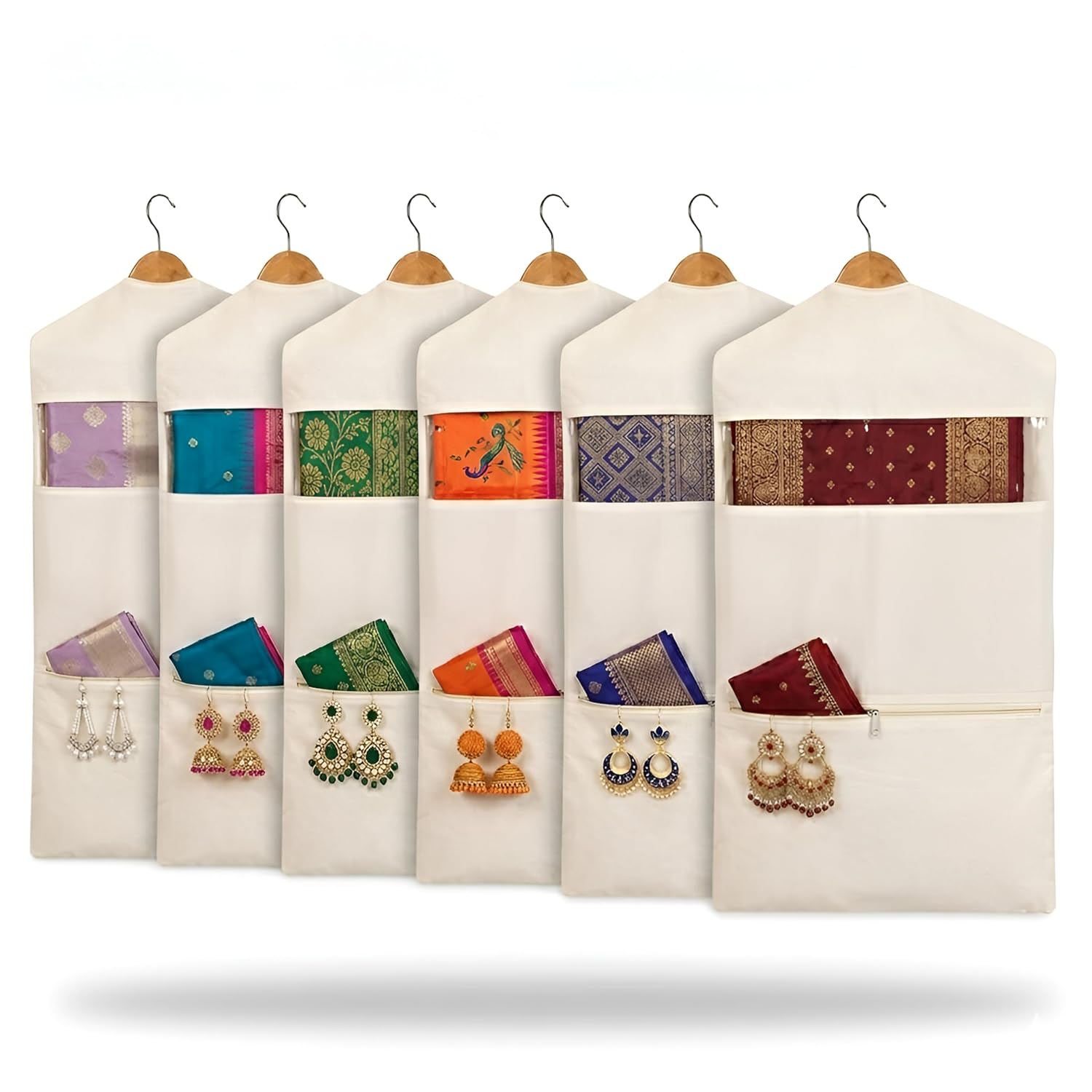
JD FRESH Slim Hanging Saree Organiser
6 pockets with mesh windows, uses only 8 inches of rod space. Best for daily wear cotton and chiffon sarees in compact wardrobes. The mesh panels provide constant airflow — critical during monsoon.
Check Price on Amazon
IKEA SKUBB Box Set (6-Pack)
Modular, stackable fabric boxes that turn any shelf into a multi-level saree storage system. Each box holds 3-4 folded sarees. Stack 2-3 high on a single shelf. Add cotton liners for silk sarees.
Check Price on IKEA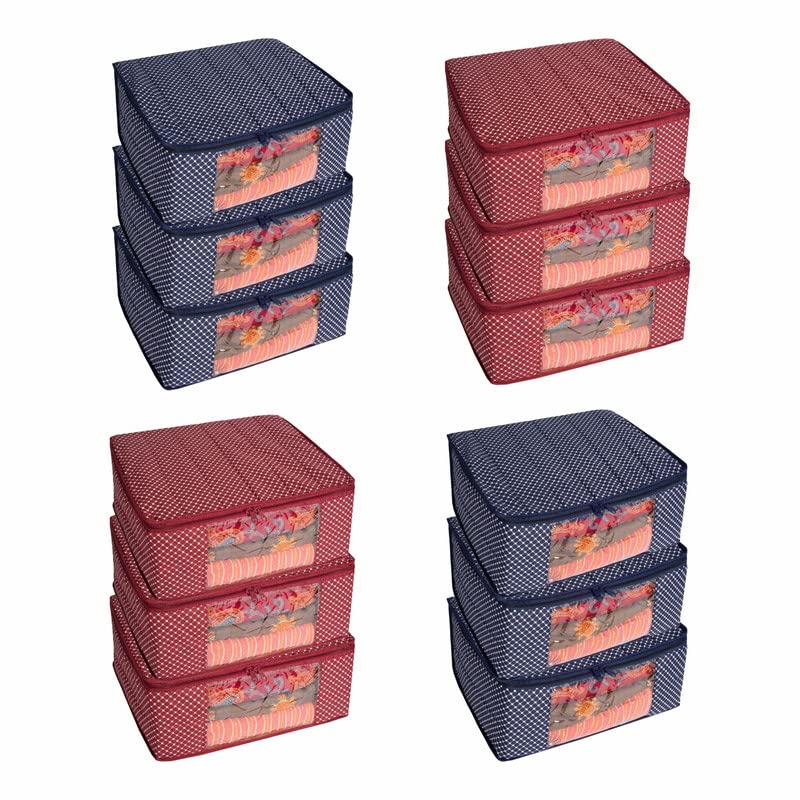
Homestrap Premium Cotton 6-Section Saree Organiser
100% cotton with individual compartments. Each saree gets its own breathable pocket. Best for folded silk sarees stored on shelves. The cotton canvas breathes naturally — no moisture buildup.
Check Price on Amazon
Homestrap Non-Woven Zip Storage Bag (3-Pack)
Budget-friendly under-bed or top-shelf storage for off-season cotton sarees. Each bag holds 4-6 sarees. The transparent window lets you see contents. Not for silk — use only for cotton and synthetics.
Check Price on Amazon
ATORAKUSHON Heritage Muslin Box Organiser
The gold standard for heirloom saree storage in small spaces. Rigid box with muslin lining, separate compartments, and lid that prevents stacking pressure. Perfect for the 2-3 bridal sarees you keep in your main wardrobe.
Check Price on Amazon
PrettyKrafts Individual Muslin Wrap Organiser
Each saree wraps in its own muslin cloth and slides into a dedicated compartment. Textile-museum-grade preservation. Ideal for bridal and Kanjeevaram sarees you want to keep in your wardrobe rotation.
Check Price on AmazonFor a complete list of all tested products, visit our best saree organisers comparison page. And don't forget to read our guide on all articles for more saree storage tips and wardrobe organization advice.
Frequently Asked Questions About Small Wardrobe Saree Organization
To organize sarees in a small wardrobe, use vertical space with shelf risers and stackable organizers like IKEA SKUBB boxes. Install a hanging saree organiser for daily wear — it uses rod space efficiently. Use drawer dividers for folded sarees filed upright KonMari-style. Store off-season sarees in vacuum bags (cotton only) or under-bed boxes. Maximize door space with over-door hooks and wall-mounted racks. Keep only 10-15 sarees accessible in your main wardrobe and rotate seasonally.
The best way to store sarees in a small space combines vertical hanging organizers, stackable shelf boxes, and drawer filing systems. Use cascading hangers for daily wear — 5 sarees in the space of 1. Fold silk sarees in breathable cotton organizers on high shelves. Store blouses in a dedicated drawer with dividers. Vacuum-seal off-season cotton sarees to free up 60% more space. Wall-mounted pegboards hold accessories. Every inch counts — use risers, door hooks, and under-bed boxes to create storage where none existed.
Yes, but with important limits. Only hang lightweight sarees — cotton, chiffon, georgette under 800g. Use cascading hangers (5-6 tier) or a slim hanging saree organiser with individual pockets. Never hang heavy silk, Kanjeevaram, or bridal sarees — gravity stretches fabric and stresses zari over months. For small wardrobes, limit hanging space to the 6-8 sarees you wear most often. Everything else should be folded in shelf or drawer storage. The JD FRESH Slim Hanging Saree Organiser is our top pick for compact hanging storage.
A well-organized small wardrobe (3-4 feet wide) can hold 25-35 sarees. Break it down: 10-15 folded on shelves in stackable boxes, 6-8 in a hanging organiser on the rod, 4-6 filed upright in a deep drawer, and 10-15 off-season sarees in under-bed boxes or vacuum bags. The key is not to exceed these numbers — overcrowding causes creases, friction, moisture damage, and colour transfer. Better to own 30 well-stored sarees than 50 crammed into a space meant for 25.
Top products include: IKEA SKUBB box set (stackable shelf storage, Rs. 1,499), JD FRESH Slim Hanging Saree Organiser (vertical rod storage, Rs. 699), Homestrap Premium Cotton Saree Organiser (breathable shelf storage, Rs. 1,099-1,499), cascading hanger hooks (5-tier, Rs. 200-400), IKEA VARIERA boxes (blouse dividers, Rs. 399 each), under-bed low-profile storage boxes (Rs. 500-800), and wall-mounted wooden peg racks (Rs. 600-1,200). Vacuum storage bags (Rs. 200-500) for off-season cottons. All tested in real small wardrobes.
To store sarees for long time in a small wardrobe: 1) Use breathable cotton or muslin organizers — never plastic. 2) Place acid-free tissue between every 2-3 folds. 3) Store silk sarees flat on shelves in stackable cotton boxes — never hang them. 4) Add 2-3 silica gel packets per compartment during monsoon. 5) Refold every 3-4 months shifting crease lines by 2-3 inches. 6) Keep off-season sarees in under-bed storage or vacuum bags (cotton only). 7) Rotate your capsule wardrobe every season so no saree sits untouched. 8) Add neem leaves or lavender for natural pest protection. For detailed instructions, see our full guide on how to store sarees for long time.