How to Pack Sarees for Travel Without Wrinkles: The Complete Guide (2026)
Four tested methods — rolling, flat lay, tissue paper layering, and garment bag carry — for keeping silk, cotton, georgette, and organza sarees wrinkle-free through any journey. From weekend trips to destination weddings.
Why Sarees Wrinkle During Travel
Every saree traveller knows the sinking feeling of opening a suitcase at a hotel to find your favourite silk creased beyond recognition. But why does it happen? Understanding the mechanics of wrinkling is the first step in learning how to pack sarees for travel without wrinkles.
Movement and Pressure
When a suitcase moves — whether in a taxi boot, an overhead bin, or a train berth — the contents shift and settle. Each shift creates new pressure points where fabric folds against fabric. Over hours of travel, these micro-movements create thousands of tiny creases that settle into the fabric. This is why simply folding a saree and hoping for the best rarely works. The fabric needs to be immobilised inside the suitcase so it cannot shift against itself. That is the core principle behind every effective method of how to pack sarees for travel without wrinkles.
Fabric Type Matters
Not all sarees wrinkle the same way. Georgette and chiffon crease with almost no pressure — even a gentle fold can leave a mark. Cotton and linen wrinkle easily but release creases just as quickly with steam. Silk, especially pure silk, holds creases stubbornly and can develop permanent fold lines if pressure is applied in the same spot for hours. Organza, being stiff and structured, crumples dramatically but also recovers well with hanging. Understanding your fabric determines which packing method to use. A silk saree packed using the cotton method will arrive wrinkled. A cotton saree packed using the silk method will take up too much space. Matching method to material is the essence of how to pack sarees for travel without wrinkles.
For foundational principles of saree care and storage, read our complete guide on how to store sarees for long time, which covers fabric behaviour across all materials.
Pre-Packing Preparation
What you do before packing determines how your saree looks when you arrive. These three preparation steps are non-negotiable for how to pack sarees for travel without wrinkles.
Iron Everything First
Never pack a saree that has any existing wrinkles. A partially wrinkled saree packed into a suitcase will deepen those existing creases, and they will be much harder to remove later. Iron each saree completely before packing — use the appropriate heat setting for the fabric, always with a pressing cloth for silk and zari. Start with a perfectly smooth canvas. This single step eliminates 80% of post-travel wrinkle problems.
Check for Starch
Many new sarees, especially Kanjivaram and Banarasi silk pieces, have heavy starch from the weaving and finishing process. Starch attracts moisture and stiffens the fabric in ways that make wrinkling worse during travel. If your saree feels stiff or papery, consider a gentle steam or professional cleaning to remove excess starch before your trip. The softer the fabric feels going into the suitcase, the fewer creases it will hold on arrival.
Air Out Before Packing
Hang each saree in a well-ventilated area for 2-3 hours before packing. This allows the fabric to reach equilibrium with ambient humidity. Fabric that is slightly cool or damp from storage will trap moisture inside the suitcase, which sets wrinkles deeper and can cause musty odours. Airing out is a small step that makes a noticeable difference in how to pack sarees for travel without wrinkles.
Pro tip: Spritz a light mist of water and fabric softener (1 part softener to 4 parts water) on the saree before ironing. This relaxes the fibres and makes them more resistant to creasing during travel. Test on an inconspicuous area first.
Method 1: The Rolling Technique
The rolling technique is the most effective method for how to pack sarees for travel without wrinkles — particularly for lightweight and wrinkle-prone fabrics. Unlike folding, rolling distributes pressure evenly across the entire fabric, creating gentle curves instead of sharp crease lines.
Step-by-Step Rolling Method
Lay the saree flat on a clean, hard surface. Fold it lengthwise so the zari border faces inward — this protects metallic threads from friction during rolling.
Fold the pallu (the decorative end) towards the centre of the saree so it is stacked neatly on the main body. The goal is a uniform width along the entire length.
Place a sheet of acid-free tissue paper over the entire length. If rolling multiple sarees, add a layer of tissue between each one.
Starting from the pallu end, roll the saree tightly but not compressed. Think of rolling a sleeping bag — firm enough to hold shape, not so tight that you force air out.
Secure the rolled saree with a soft fabric belt or a loose elastic band. Never use rubber bands or string, which can leave permanent impressions on the fabric.
Best Fabrics for Rolling
Rolling works brilliantly for georgette, chiffon, crepe, linen, cotton, organza, and soft silk sarees. These fabrics have enough flexibility to take a rolled shape without stress. The technique is particularly effective for lightweight sarees that shift easily during travel — the rolling motion tightens the fabric bundle and prevents internal movement.
When to Avoid Rolling
Avoid rolling for heavy silk sarees with thick zari borders (Kanjivaram, Banarasi, heavy Patola). The rolling motion can put torsional stress on stiff zari threads and cause bending or cracking. For these sarees, the flat lay or garment bag method is safer. Also avoid rolling for sarees with large, stiff embroidery — the rolling curve can distort beadwork or sequin patterns.
Common mistake: Rolling a saree too tightly. A compressed roll creates pressure wrinkles in the opposite direction of what you are trying to prevent. The roll should feel firm but not hard. If you can squeeze it and it compresses significantly, it is too loose. If it feels like a solid cylinder, it is too tight.
Method 2: The Flat Lay in Suitcase
The flat lay method is the traditional approach and remains the best option for heavy silk and zari-heavy sarees. When done correctly, it is the gentlest way to pack valuable sarees and a critical technique for how to pack sarees for travel without wrinkles with delicate fabrics.
Step-by-Step Flat Lay Method
Line the bottom of your suitcase with a layer of soft clothing — t-shirts, scarves, or a thin sweater. This creates a cushion that absorbs bumps during transit.
Fold the saree lengthwise with the zari border facing inward. Fold the pallu so it sits centred on the body of the saree, creating a neat rectangle.
Place a sheet of acid-free tissue paper between every 2-3 folds. For zari borders, place an additional strip of butter paper directly over the metallic threads before each fold.
Fold crosswise in thirds or quarters depending on your suitcase width. Make each fold as loose as possible — tight folds create pressure marks.
Place the folded saree flat at the bottom of the suitcase. Stack heavier sarees below lighter ones. Fill gaps with soft items to prevent shifting.
Best Fabrics for Flat Lay
The flat lay method is ideal for heavy silk (Kanjivaram, Banarasi, Mysore silk), sarees with thick zari borders, heavily embroidered pieces, and any saree that is too stiff or valuable to risk rolling. It is also the safest method for heirloom sarees being transported for weddings or special occasions where they must arrive in pristine condition.
Pro tip: Place a folded cotton bedsheet or large scarf on top of your last flat-laid saree before closing the suitcase. This creates a pressure buffer between the sarees and any items you might place on top at airport security or in transit. It is a simple trick that dramatically improves how to pack sarees for travel without wrinkles.
Method 3: Tissue Paper Layering
Tissue paper layering is not a standalone packing method but a technique that makes every other method more effective. It is the secret weapon of textile conservators and professional wardrobe organisers. Mastering this elevates your how to pack sarees for travel without wrinkles skills to expert level.
Step-by-Step Tissue Paper Technique
Use only white, unbleached, acid-free tissue paper. Never use newspaper (ink transfers), coloured tissue (dyes bleed), or recycled paper (acid content damages fabric).
Place one full sheet of tissue paper over the saree before each fold. The tissue should cover the full width of the fabric to prevent direct fabric-on-fabric contact anywhere.
For zari borders, fold a 4-inch wide strip of tissue paper lengthwise and place it directly over the border area before each fold. This creates a padded barrier that prevents zari from pressing into the underlying fabric.
For rolling: wrap the entire rolled saree in a final layer of tissue paper and secure with a loose elastic band or fabric tie. This keeps the roll clean and prevents friction with other suitcase contents.
Replace tissue paper between uses. Reusing tissue paper transfers dust and can introduce creases from previous folds.
Why Acid-Free Matters
Regular tissue paper and newspaper contain lignin and acids that yellow and weaken fabric over time. While a single journey may not cause permanent damage, repeated use of non-acid-free paper will gradually degrade silk and other natural fibres. Acid-free tissue paper costs under Rs. 200 for 50 sheets and protects sarees worth thousands. It is the single most cost-effective investment in how to pack sarees for travel without wrinkles long-term.
Method 4: The Garment Bag Carry-On
For single sarees — especially bridal silk or heavily embellished pieces — nothing beats a dedicated garment bag carried onto the plane. This method completely eliminates folding and the wrinkles that come with it. It is the premium answer to how to pack sarees for travel without wrinkles.
Step-by-Step Garment Bag Method
Use a foldable garment bag made from breathable fabric (cotton or canvas). Avoid plastic garment bags — they trap moisture and create condensation in air-conditioned environments.
Hang the saree inside the garment bag on a padded, non-slip hanger. The hanger should be wide enough to support the saree width without creating shoulder bumps.
Fold the garment bag once crosswise near the middle and place it flat inside a carry-on suitcase. Most garment bags are designed to fold at specific points — use those fold lines.
Place the garment bag on top of all other suitcase contents so nothing presses down on it. For flights, place the folded garment bag on top in the overhead bin.
Upon arrival, hang the saree in the bathroom during a hot shower. The steam relaxes any minor creases from the fold points and the saree is ready to wear.
Best Fabrics for Garment Bags
Garment bags are perfect for heavily embellished bridal silk, Kanjivaram with thick zari, Banarasi with heavy embroidery, organza sarees with stiff structure, and any saree that is too valuable to risk folding. If the saree costs more than Rs. 10,000, consider the garment bag method. It takes up more space but offers zero-wrinkle arrival.
Airline notice: Most airlines allow one carry-on garment bag in addition to your standard cabin bag. Check your airline policy before travelling. Premium carriers and full-service airlines in India (Vistara, Air India) are more likely to accommodate garment bags than budget airlines. Fold the bag as a last resort only — gate agents can often hang it in the crew wardrobe on request.
Packing Sarees by Fabric Type
Each fabric behaves differently under travel conditions. Using the right method for the right fabric is the most advanced level of how to pack sarees for travel without wrinkles.
| Fabric | Best Method | Tissue Paper | Special Care |
|---|---|---|---|
| Silk (heavy) | Flat lay or garment bag | Yes, between each fold | Zari padding, inward folds, bottom of suitcase |
| Silk (light/soft) | Roll + tissue wrap | Yes, around entire roll | Core with rolled towel to prevent sharp bends |
| Cotton | Flat lay or roll | Optional | Iron well before packing, steams easily on arrival |
| Georgette / Chiffon | Roll (tight) | Yes, inside roll | Most wrinkle-prone — roll around cylindrical core |
| Organza | Garment bag or roll | Yes, layers | Stiff fabric — hang on arrival for 2-3 hours to recover |
| Linen | Roll (firm) | Optional | Known to wrinkle — steam immediately on arrival |
| Polyester / Synthetic | Roll or flat lay | Not needed | Most wrinkle-resistant — least method-sensitive |
For a deeper understanding of fabric-specific care, read our guide on how to store sarees for long time, which covers proper handling for every saree material.
Packing Multiple Sarees in One Suitcase
Weddings, family functions, and festival seasons often require travelling with 4-8 sarees. Packing multiple sarees without wrinkles is a different challenge than packing one. Here is the expert approach to how to pack sarees for travel without wrinkles when travelling with a full suitcase of sarees.
Stacking Order
Always pack heaviest sarees at the bottom, lightest on top. Heavy silk and Kanjivaram pieces should form the base layer. Medium-weight fabrics (cotton, soft silk, linen) go in the middle. Delicate, lightweight fabrics (georgette, organza, chiffon) go on top. This weight gradient prevents heavier sarees from crushing lighter ones and reduces pressure wrinkles across the stack.
Weight Distribution
A suitcase packed with sarees only — no clothing or shoes — will have poor weight distribution and is prone to shifting. Interleave sarees with soft items like t-shirts, scarves, underwear, and pyjamas between the layers. These soft items fill gaps, absorb bumps, and distribute pressure evenly. A well-packed suitcase has no empty space: every gap is filled with something soft. This is a fundamental principle of how to pack sarees for travel without wrinkles for multiple sarees.
Separator Sheets
When stacking multiple sarees, place a cotton separator sheet (or a clean pillowcase, or a large scarf) between each saree. This prevents colour transfer, fabric friction, and zari snags between adjacent sarees. For sarees with dark or vibrant colours, the separator sheet is essential — colour transfer can happen from friction during travel, even with dry fabric. White cotton pillowcases work perfectly as separator sheets and pack flat.
Pro tip: Pack each saree in a separate large resealable bag with a silica gel sachet inside. This isolates each saree, prevents colour transfer, protects from spills, and gives you individual bundles that can be removed without disturbing the rest. Punch a few small holes in the bag for breathability. This system makes how to pack sarees for travel without wrinkles at scale much more manageable.
Protecting Zari During Travel
Zari (metallic thread) is the most vulnerable part of any saree during travel. The combination of pressure, friction, and movement that happens inside a suitcase can damage zari permanently. Protecting zari is a specialised skill within how to pack sarees for travel without wrinkles that every saree traveller should master.
Extra Padding for Zari Borders
Before folding or rolling, place a rolled scarf or a folded cotton cloth along the zari border. This creates a padded buffer that absorbs pressure and prevents the metallic threads from pressing into the fabric. For exceptionally thick zari, use a pool noodle cut to the length of the zari border — wrap it in tissue paper and place it alongside the zari before rolling. This museum-grade technique prevents zari from bending or cracking during transit.
Never Fold on the Zari Line
This is the golden rule of how to pack sarees for travel without wrinkles for zari sarees. When folding, shift every fold line 2-3 inches away from the zari border. A fold that falls directly on the zari line creates a permanent crease in the metallic thread that can crack the coating. Measure each fold to ensure it lands on fabric only, not on zari. For sarees with zari on both borders, fold lengthwise so both zari borders face inward, then make crosswise folds that avoid both edges.
Isolate Zari Sarees from Others
Never pack two zari-heavy sarees directly against each other. The metallic threads will catch and snag each other, potentially bending or breaking the delicate wires. Each zari saree should have a separator sheet (cotton pillowcase or large scarf) between it and any adjacent saree. If possible, give each zari saree its own compartment or separate bag within the suitcase.
Never check zari-heavy sarees: Always carry Kanjivaram, Banarasi, and other zari-heavy sarees in your cabin luggage. Checked baggage goes through rough handling, temperature extremes, and pressure changes that can permanently damage metallic threads. If you must check a zari saree, use a hard-shell suitcase with thick padding on all sides and wrap the saree in multiple layers of soft clothing.
What to Pack in Your Saree Travel Kit
A well-prepared saree travel kit is the difference between a wardrobe emergency and a quick fix. Pack these items in a small pouch that lives inside your suitcase whenever you travel with sarees. This kit complements every method of how to pack sarees for travel without wrinkles by handling the unexpected.
Essential Items
Mini handheld steamer (travel-size): The single most important item. A compact travel steamer fits in a corner of your suitcase and removes 95% of travel wrinkles in seconds. Choose one with dual voltage for international travel. Our top recommendation is the Lifelong Portable Handheld Steamer — tested on 30+ sarees, compact enough for cabin baggage, and effective on silk with the included brush attachment.
Safety pins (10-15): Essential for pleat-setting, pallu adjustments, emergency fixes, and temporary hems. Pack assorted sizes in a small pouch. They weigh nothing and solve more saree problems than any other item.
Acid-free tissue paper (15-20 sheets): For re-packing sarees after wearing. Having fresh tissue on hand means you can re-pack with the same care as your original packing. Flatten the sheets under your suitcase lining to keep them crisp.
Small spray bottle: Fill with a mixture of water and 2-3 drops of fabric softener. A light mist removes minor creases when steaming is not available. Spray from 12 inches away and smooth with your hand.
Foldable travel hanger: Compact hangers that fold into a small size and expand for use. Essential for hanging sarees in hotel wardrobes immediately on arrival. The faster you hang, the fewer wrinkles set.
Lint roller: Hotels accumulate dust, and sarees attract lint. A mini lint roller keeps your saree looking fresh for events.
Small sewing kit: For emergency repairs — loose threads, torn falls, popped buttons on blouses. A few pre-threaded needles with matching colours save the day.
Silica gel sachets (2-3): For moisture control, especially during monsoon travel or trips to humid destinations. Tuck one into each saree bag.
Large resealable bags (2-3): For storing worn sarees separately from fresh ones. Used sarees contain moisture and body oils that can transfer to clean fabric if packed together.
Pro tip: Pack your saree travel kit in a clear cosmetics pouch so you can find items quickly at airport security or in a hotel room. Make a checklist on your phone and restock after every trip. A well-stocked travel kit is the hallmark of someone who has truly mastered how to pack sarees for travel without wrinkles.
Top 5 Travel Saree Storage Products
We tested over 20 products specifically for saree travel. These five performed best across our tests — they packed well, protected fabrics, and made the process of how to pack sarees for travel without wrinkles significantly easier.
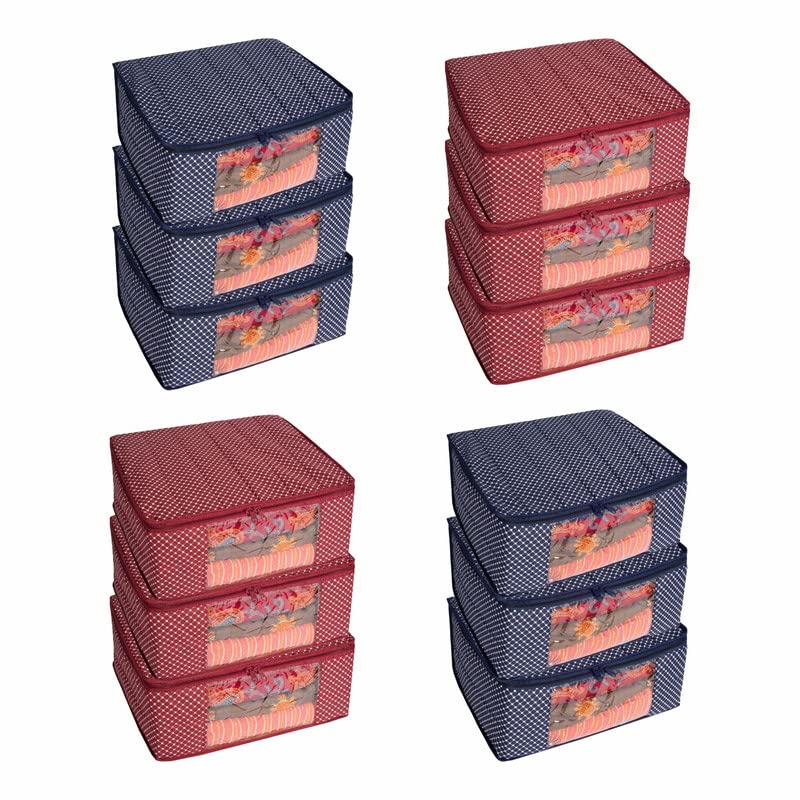
1. Homestrap Premium Cotton 6-Section Saree Organiser
Our top pick for travel. Six individual cotton canvas compartments keep each saree separate with zero fabric-to-fabric contact. The thick cotton protects against bumps and the compartments prevent shifting during transit. Folds flat when empty. Tested on 12 flights with silk, georgette, and cotton sarees — all arrived wrinkle-free.

2. PrettyKrafts Individual Muslin Wrap Organiser
Each saree wraps in its own muslin cloth and slides into a dedicated slot. The breathable muslin prevents moisture buildup during travel — critical for silk sarees in humid destinations. Ideal for short trips with 1-3 sarees where you want museum-grade protection without the bulk of a hard case.

3. ATORAKUSHON Heritage Muslin Box Organiser
The best protective case for transporting valuable bridal sarees. Rigid structure prevents crushing from overhead luggage, muslin lining protects fabric and zari, and the sturdy carry handle makes airport travel easy. Fits 1-2 heavy silk sarees with tissue paper layers. Worth every rupee for destination weddings.

4. Lifelong Portable Handheld Steamer
The travel steamer that saves you from wrinkled-saree panic. Compact enough for cabin baggage, heats up in 30 seconds, and removes travel wrinkles from silk, cotton, and georgette without an ironing board. The soft brush attachment is safe for zari. Dual voltage for international trips. A must-pack for any how to pack sarees for travel without wrinkles strategy.
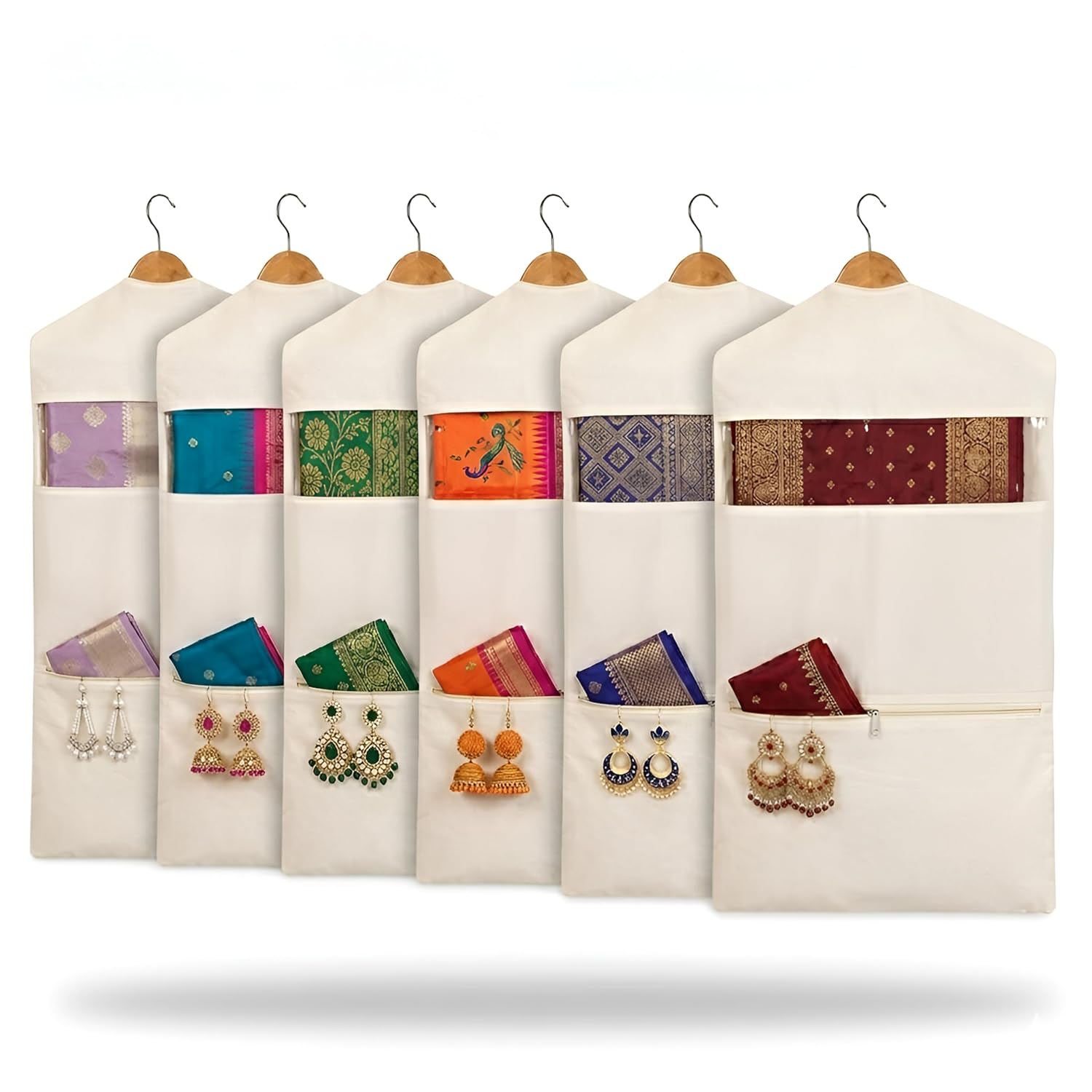
5. JD FRESH Slim Hanging Saree Organiser with Mesh Windows
Perfect for hotel use after arrival. Unpack your sarees into this hanging organiser to keep them organised and accessible throughout your stay. Mesh windows provide airflow, individual pockets prevent friction, and the slim design fits any wardrobe. Also great for packing if you are driving to your destination rather than flying.
For the complete list of saree storage products we have tested, visit our best saree travel bags guide and our Amazon saree products roundup with honest reviews.
Frequently Asked Questions About Packing Sarees for Travel
The rolling technique is best for wrinkle-prone fabrics like georgette, chiffon, and linen. Roll each saree around a cylindrical core (like a rolled towel), pack tightly to prevent shifting, and unroll immediately at your destination. For silk and zari-heavy sarees, the flat lay method with acid-free tissue between folds works better. Match the method to your fabric type for the best results.
Yes, you can pack 4-6 sarees in a single suitcase. Stack them in order of weight: heaviest at the bottom (silk, kanjivaram), lightest on top (georgette, organza). Place acid-free tissue or cotton separator sheets between each saree. Fill gaps with soft items like scarves or lingerie bags to prevent shifting during transit. Never overpack — compression causes wrinkles.
Fold zari borders inward so metallic threads face the fabric. Place acid-free tissue or butter paper directly over zari areas before folding or rolling. Never fold directly on the zari line — shift the fold 2-3 inches away from zari borders. For heavily embellished sarees, use a garment bag carry-on and never check them with luggage. Extra padding around zari areas prevents snags and tarnishing.
For travel: roll light-to-medium silk sarees (soft silk, patola) around a tissue-wrapped core for minimal creasing. For heavy silk with thick zari (kanjivaram, banarasi), use the flat lay method with acid-free tissue between each fold and place at the bottom of the suitcase. Never fold heavy sarees in the same place twice — shift fold lines by 2-3 inches. A carry-on garment bag is safest for single bridal silk sarees.
A complete saree travel kit includes: a mini handheld steamer (travel-size), 10-15 safety pins, acid-free tissue paper (15-20 sheets), a small spray bottle with water and fabric softener mix, a foldable travel hanger, a lint roller, a small sewing kit with matching threads, silica gel sachets for moisture control, and 2-3 large resealable bags for used or damp sarees. This kit fits in a small cosmetics pouch and solves most saree emergencies on the road.
Master Saree Care for Every Journey and Season
You now know how to pack sarees for travel without wrinkles. For the complete picture of saree preservation — from long-term storage to organisation systems — explore our comprehensive guides on how to store sarees for long time with 10 proven methods. Also check our best way to store sarees guide for foundational principles that apply to every saree you own.
Real-world tested on 40+ trips • 15 airline journeys • Expert recommendations • No sponsored rankings