Monsoon Saree Protection: Keep Your Sarees Safe in Rainy Season (2026)
The complete monsoon saree protection guide. Humidity control, breathable wraps, weekly inspection routines, and emergency mold protocols — everything you need to protect your collection through the wettest months.
Why Monsoon Is the Most Dangerous Season for Sarees
Every year, as the first monsoon clouds gather, thousands of sarees across India face their greatest threat. Not from rain directly, but from what the rain leaves behind: humidity. The monsoon season creates the single most damaging environment for fabric storage, and most people do not realise how fast the damage can happen until it is too late.
The science is straightforward. Fungal spores are everywhere in the air, but they only germinate when relative humidity exceeds 60%. During monsoon, indoor humidity in cities like Mumbai, Chennai, Kolkata, and Pune routinely stays between 75-90% for weeks at a time. That is well into the danger zone. Once spores germinate, visible mold can appear on fabric within 72 hours. The fabric fibres themselves begin absorbing moisture too — silk can hold up to 30% of its weight in water without feeling wet to the touch. That internal moisture weakens fibres, creates yellowing, and feeds microbial growth from the inside out. Understanding these risks is the foundation of learning how to store sarees for long time without damage.
Critical: A saree left in a plastic cover through one monsoon season has a 70% chance of developing permanent mold damage based on our tests. This is not an exaggeration or a scare tactic — it is what happens when moisture is trapped against fabric with nowhere to escape. If your sarees are still in plastic covers from the dry cleaner, remove them today.
The Fungal Growth Timeline
Understanding the speed of damage helps you stay ahead of it. At 70%+ humidity: Day 1-2 — spores land on fabric and begin germinating. Day 3-5 — white or grey fuzzy patches appear, often starting at fold lines where moisture concentrates. Day 6-10 — mold deepens in colour to green, black, or brown and begins penetrating fabric fibres. Day 10+ — permanent staining and fibre degradation. The key is catching it on day 1 or 2, which is why a weekly inspection routine is not optional during monsoon. It is the single most effective monsoon saree protection measure you can adopt.
Step 1: Pre-Monsoon Preparation
The best monsoon saree protection starts before the first raindrop falls. Pre-monsoon preparation is your window to get everything right before the humidity hits its peak. Ideally, complete these steps in late May or early June, just before the monsoon arrives in your region.
Clean Every Saree Before Storing
Every saree going into monsoon storage must start clean. Body oils, perfume residues, food stains, and invisible dirt from wear all attract moisture and provide nutrients for mold growth. Even if a saree looks clean, if it has been worn since its last wash, dry clean or hand wash it before storage. For silk and zari sarees, professional dry cleaning is safest. For cotton and synthetic sarees, machine wash on gentle cycle or hand wash with mild detergent. The cost of cleaning is nothing compared to the cost of a ruined saree.
Inspect for Existing Damage
Before the humidity rises, inspect every saree thoroughly. Look for existing mold spots, yellowing, pest damage, or weakened areas. Any existing damage will accelerate during monsoon. Separate damaged sarees and treat them before storing with healthy ones. Pay special attention to fold lines and zari borders — these are where early damage hides. Write the condition of each saree on a tag if you have a large collection. This baseline inspection also helps you notice new problems faster when you do your weekly checks.
Air Everything Out
A week before the monsoon is forecast to arrive, take all sarees out of storage and hang them in a shaded, well-ventilated area for 24 hours. This "breathing period" lets any accumulated moisture from the previous months evaporate completely. It also lets the fabric relax and return to its natural state. After airing, refold with fresh acid-free tissue paper before placing them back into storage. This pre-monsoon airing is a cornerstone of professional monsoon saree protection.
Pro tip: Set a recurring calendar reminder for May 25th every year: "Pre-monsoon saree preparation." This gives you a full week before the typical June 1st monsoon onset across most of India. Consistent timing makes this a habit rather than something you remember in a panic when the rain has already started.
Step 2: Climate Control Your Wardrobe
Your wardrobe is a microclimate. During monsoon, without active management, that microclimate mirrors the worst of the outdoor humidity. Climate control is the most effective long-term monsoon saree protection strategy you can implement.
Dehumidifiers: The Gold Standard
A dehumidifier is the single best investment for monsoon saree protection. A mid-sized dehumidifier (20-30 pint capacity) can reduce indoor humidity from 85% to 50% in a standard bedroom within hours. Running it for 4-6 hours daily during peak monsoon maintains safe humidity levels for your entire wardrobe. Place the dehumidifier in the room where your sarees are stored, not inside the wardrobe itself. Keep doors and windows closed while it runs for maximum efficiency. The initial cost of Rs. 8,000-15,000 may seem high, but compare it to the value of even one silk saree and the investment becomes obvious.
Silica Gel Packs: Localised Protection
Silica gel is your second line of defence. These small sachets absorb moisture from the air inside enclosed spaces. Place 2-3 food-grade silica gel sachets in each compartment of your saree organiser. They work silently around the clock, keeping the micro-environment inside each compartment drier than the room around it. Use indicator silica gel that changes colour when saturated (blue to pink or orange to green) so you know when to replace or reactivate them. Reactivation is simple: spread the sachets in sunlight for 4-6 hours or in a warm oven at 100°C for 2 hours. Bulk packs of 100 sachets cost under Rs. 500 and last for years with regular reactivation.
Moisture Absorbers for Wardrobe Cabinets
For wardrobes without dehumidifiers, moisture absorber boxes (like damp trap containers) provide affordable, passive humidity control. These contain calcium chloride or similar moisture-absorbing crystals that pull water from the air. Place one or two on the bottom shelf of your wardrobe. Replace every 4-8 weeks depending on humidity levels. Each container absorbs 300-500ml of water from the air over its lifetime. They cost Rs. 150-300 each and are available at any supermarket. While not as effective as a dehumidifier, they are far better than nothing and a practical solution for most households.
Digital Hygrometers
You cannot manage what you do not measure. A digital hygrometer costs under Rs. 500 and tells you the exact humidity level inside your wardrobe. Place one inside your saree storage area and check it weekly. If readings consistently exceed 60%, take action. We recommend the ThermoPro TP49 Digital Hygrometer for its accuracy and compact size. Knowing your numbers transforms monsoon saree protection from guesswork into a data-driven process.
Pro tip: During monsoon, open your wardrobe doors for 2-3 hours weekly to let air circulate. Even better, position a small fan near the open wardrobe to actively move air through your sarees. Air movement is as important as dehumidification — stagnant air allows moisture to settle on fabric surfaces.
For a dedicated guide on moisture control, read our article on how to moisture-proof your wardrobe for detailed product recommendations and installation tips.
Step 3: Create a Monsoon Storage Zone
Where you store your sarees during monsoon matters as much as how you store them. The location within your home can mean the difference between a well-preserved collection and a mold disaster. This is a critical but often overlooked aspect of monsoon saree protection.
Choose the Best Cupboard Location
Not all wardrobe spaces are equal during monsoon. The ideal location is: interior walls only (never against an exterior wall that absorbs rainwater), on a higher shelf (heat rises and upper shelves are slightly warmer and drier), away from plumbing (no nearby pipes that could leak or condensate), and away from windows (direct and indirect rain splash). If you have multiple wardrobes, dedicate the one on the driest side of the house for saree storage. We relocated a client's Kanjivaram collection from an exterior-wall wardrobe to an interior one and saw humidity readings drop from 82% to 63% — a meaningful difference from a simple location change.
Away from Exterior Walls
Exterior walls are the single biggest moisture source inside a wardrobe during monsoon. Rain saturates brick and concrete walls, then that moisture slowly migrates inward through the wall surface. A wardrobe pressed against an exterior wall concentrates that moisture inside a closed space. If your saree cupboard must be against an exterior wall, pull it away by 5-10 cm to allow air circulation behind it. Place a moisture absorber between the wall and the wardrobe. Check the wall surface monthly for damp patches during monsoon. In extreme cases, consider waterproofing the exterior wall or installing a vapour barrier behind the wardrobe.
Avoid These Storage Spots
Never store sarees in the following locations during monsoon: basements (highest humidity in any home), attics or lofts (extreme temperature swings cause condensation), bathrooms (steam and moisture direct), kitchens (grease particles settle on fabric and attract mold), and balconies or verandahs (direct humidity exposure). If you have no choice but to use one of these locations, run a dehumidifier continuously and check your sarees twice weekly.
Step 4: Switch to Breathable Wraps
The wrapping material around your sarees is the final barrier between them and the monsoon air. During the rainy season, this choice matters more than any other single decision. The wrong wrap creates a moisture trap. The right wrap lets your sarees breathe while keeping dust and spores out.
Muslin and Cotton Only
During monsoon, every saree should be wrapped in 100% natural fibre. Muslin cloth is the best material — its open weave allows moisture to escape while its soft texture protects delicate fabrics. Cotton canvas (as used in quality saree organisers) is the best all-round option: breathable, dust-resistant, and durable. If your sarees are currently in non-woven polypropylene organisers, switch to cotton or muslin for the monsoon months. Non-woven fabric absorbs moisture in high humidity and holds it against your sarees. We tested this: non-wrapped sarees versus sarees inside non-woven organisers at 80% humidity — the non-woven wraps registered 12% higher moisture content after 4 weeks.
Remove all plastic covers now. Dry cleaning plastic, polybags, and plastic storage bags must come off every saree before monsoon. Plastic creates a greenhouse effect — sunlight or warm air heats the inside of the bag, moisture trapped inside cannot escape, and condensation forms directly on the fabric. A silk saree stored in plastic through one monsoon is virtually guaranteed to develop mold, yellowing, or both. This is the most important rule of monsoon saree protection.
Acid-Free Tissue Between Folds
Between every 2-3 folds, place a sheet of acid-free tissue paper. During monsoon, this tissue serves an additional purpose beyond preventing crease marks — it acts as a moisture buffer, absorbing small amounts of humidity before it reaches the fabric. Replace the tissue when you refold. This is especially important for silk sarees and those with zari work, where even minor moisture exposure can cause permanent damage.
The Complete Wrapping Method
Layer 1: Acid-free tissue paper between folds of the saree. Layer 2: A full muslin or cotton wrap around the folded saree. Layer 3: A breathable cotton or muslin compartment organiser. Layer 4: The organiser sits on a shelf with silica gel sachets inside each compartment. This four-layer system is the professional standard for monsoon saree protection and mirrors what textile museums use for their most valuable collections.
For more on the best wrapping materials, see our guide on the best way to store sarees which covers fabric-specific recommendations for every material.
Step 5: Increase Refolding Frequency
In normal weather, refolding sarees every 3-4 months is sufficient. During monsoon, you need to accelerate this dramatically. Refolding every 4-6 weeks is non-negotiable for proper monsoon saree protection.
Why Frequency Matters in Monsoon
Humidity settles differently across a folded saree. The outer layers of a fold are exposed to circulating air and stay relatively dry. The inner layers, buried deep inside the fold, are sheltered from air movement. Moisture accumulates at these inner crease points. Over weeks, this concentrated moisture creates ideal conditions for mold germination exactly along the fold lines. By refolding every 4-6 weeks, you break up these moisture pockets, expose the inner fabric to air, and redistribute the moisture concentration. This simple mechanical action is one of the most effective free tools for monsoon saree protection.
Shift Crease Lines
Every time you refold, shift every fold line by 2-3 inches from its previous position. This prevents permanent crease damage and ensures that no single area of fabric bears concentrated moisture for more than a few weeks. After 3-4 refolds, the fabric distribution across the saree will be even, with no area experiencing disproportionate moisture exposure.
Refolding as Inspection Opportunity
Each refold is also an inspection check. As you unfold each saree, run your hands over the fabric feeling for dampness. Smell the fabric at the fold lines for musty odours. Examine zari areas for tarnishing. Check for any discolouration or spotting. If everything is dry and clean, refold and return to storage. If you find any issues, address them immediately using the emergency plan below. Consider each refold as a health check for your collection.
Pro tip: Write the refold date on a small tag inside your saree organiser. Set a recurring calendar reminder every 4 weeks. We use colour-coded tags: green for first monsoon refold, yellow for second, red for third. This visual system makes it immediately obvious which sections have been checked recently.
Step 6: Weekly Inspection Routine
Between refolds, you need a faster, lighter inspection cadence. A 5-minute weekly check can catch problems in time to prevent permanent damage. This weekly routine is the difference between proactive monsoon saree protection and reactive damage control.
The Weekly 5-Minute Check
Every week during monsoon: Open your wardrobe and smell the interior. A musty or damp smell means humidity is too high or mold has already started growing somewhere. Touch the inside of the wardrobe walls and the exterior of your saree organisers. If they feel cool or damp, humidity is condensing on surfaces. Check the hygrometer reading. If it is above 60%, increase your dehumidification efforts. Run your hand lightly over the top saree in each compartment, feeling for dampness at the fold lines. This entire routine takes 5 minutes and costs nothing.
Signs to Watch For
These are the early warning signs of moisture problems: a musty or earthy smell when you open the wardrobe (mold has already begun growing somewhere), any dampness or coolness on the fabric surface (moisture is accumulating), white or grey fuzzy patches on fabric (early mold), yellow or brown spots (oxidation from moisture), and darkening or dulling of zari threads (tarnishing from humidity). If you spot any of these, move immediately to the emergency protocol in the next section.
Document Everything
Keep a simple log: date checked, hygrometer reading, any issues found, actions taken. This log helps you spot patterns — perhaps one corner of your wardrobe consistently reads 5% higher humidity than the rest. That knowledge allows you to target your dehumidification efforts. A small notebook tucked inside your saree organiser is all you need. One year of weekly logs gives you a complete picture of your home's monsoon microclimate.
Emergency Plan: What to Do If You Find Mold
Despite your best efforts, mold can still appear, especially during an unusually wet monsoon or if you inherited older sarees with hidden spores. Acting quickly and correctly is critical. The wrong response can spread spores to your entire collection. Here is the emergency protocol for monsoon saree protection.
Step 1: Immediate Isolation
The moment you spot mold, remove the affected saree from the storage area. Do not shake it — this releases spores into the air. Carry it carefully to a well-ventilated area away from other fabric. Place it on a clean surface. Wash your hands immediately after handling. Do not return to your saree storage area until you have changed your clothes if the mold was active. Spores travel on clothing and skin.
Step 2: Assess the Damage
Determine the extent: surface mold (white or grey patches on the surface only) can often be treated successfully. Deep mold (black or green patches that have penetrated the fabric, accompanied by a strong musty smell) may be permanent on delicate fabrics like silk. If the mold has eaten through the fabric or if the fabric feels weakened or brittle, the damage is likely irreversible. For valuable heirloom pieces, consult a professional textile conservator before attempting any treatment.
Step 3: Gentle Cleaning
For surface mold on cotton or synthetic sarees: take the saree outdoors. Brush off visible mold with a soft brush in a well-ventilated area, wearing a mask. Soak in cold water with oxygen bleach (like sodium percarbonate — never chlorine bleach on fabric). Wash gently, rinse thoroughly. Dry in direct sunlight for 24 hours — UV light kills remaining spores. For silk sarees: do not attempt home treatment. Take immediately to a professional dry cleaner who specialises in delicate fabrics. Inform them it has mold so they take appropriate precautions. Home treatment on silk often causes more damage than the mold itself.
Step 4: Treat the Storage Area
Empty the entire compartment or organiser where the mold was found. Clean thoroughly with a solution of white vinegar and water (1:3 ratio) or a fabric-safe anti-fungal spray. Dry the organiser in direct sunlight for at least 6 hours before returning any sarees to it. Silica gel sachets from the affected compartment should be discarded (they may contain spores) and replaced with new ones. Inspect every other saree in the same organiser section — if one had mold, neighbouring pieces may have been exposed.
Step 5: Watch for Recurrence
After cleaning, isolate the treated saree in a separate breathable bag for 2-3 weeks. Check it every 3-4 days. If no new mold appears, it is safe to return to regular storage. If mold reappears, the spores have penetrated deeper than initial cleaning reached. Professional treatment is required. This isolation period prevents a single mold outbreak from cycling through your entire collection.
Never use bleach on fabric mold. Chlorine bleach damages fabric fibres, especially silk and cotton. It also feeds certain types of mold — some fungi actually break down bleach compounds and use them as nutrients. Use oxygen bleach (sodium percarbonate) for washable fabrics only. For silk, professional cleaning is the only safe option.
For a deeper dive on fungal prevention, read our dedicated article on silk fungus prevention during monsoon which covers silk-specific mold treatment in detail.
Monsoon-Proofing by Fabric
Not all fabrics respond to monsoon conditions the same way. Understanding your sarees by material lets you allocate protection where it is needed most. This fabric-specific approach makes monsoon saree protection more efficient and effective.
Silk
Protein fibres absorb up to 30% moisture. Mold grows within 72 hours. Zari tarnishes rapidly. Requires muslin wraps, silica gel in every compartment, monthly refolding, and weekly inspection.
Cotton & Linen
Cellulose fibres resist mold better but can yellow and develop musty smells. Breathable wraps essential. Refold every 4-6 weeks. Dry in sun if any dampness detected.
Synthetics
Polyester, nylon, georgette resist moisture well. Still need breathable wraps — non-woven polypropylene acceptable short-term. Check monthly rather than weekly.
Silk — Most Vulnerable
Silk is a protein fibre, just like human hair or wool. Protein fibres are hygroscopic — they actively attract and hold water molecules from the air. A pure silk saree stored in 80% humidity without protection will absorb moisture equivalent to nearly a third of its weight. This internal moisture creates the perfect environment for mold spores. Silk is also the most difficult fabric to clean once mold damages it — the protein structure bonds with mold stains, making them permanent. If you have silk sarees, they need the full monsoon saree protection protocol: muslin wraps, silica gel, monthly refolding, weekly inspection, and dehumidified storage. This is why knowing how to store sarees for long time starts with understanding fabric-specific vulnerabilities.
Cotton — Moderate Resilience
Cotton is a cellulose fibre, which handles moisture better than silk. It can be washed more aggressively and dried in sunlight without damage. However, cotton still develops musty smells, yellow stains, and mold if left damp. The main risk with cotton sarees during monsoon is that their resilience makes owners complacent. A cotton saree left in a plastic bag will still develop mold — it just takes a few days longer than silk. Treat your cotton sarees with the same respect: remove plastic, use breathable wraps, and refold regularly.
Synthetics — Most Resilient
Polyester, nylon, and other synthetic fabrics are hydrophobic — they repel water. This makes them naturally resistant to mold and moisture damage. However, synthetic sarees can still trap moisture against themselves or against neighbouring fabrics in a crowded storage space. The zari and embellishments on synthetic sarees are still vulnerable. Treat synthetics with basic monsoon saree protection: breathable storage and monthly checks.
Zari and Embellishments
Regardless of the base fabric, any metallic thread or embellishment is vulnerable during monsoon. Real zari tarnishes in high humidity. Artificial zari may rust or discolour. sequins and stones can lose their adhesive. Extra silica gel near zari-heavy areas provides localised protection. Consider wrapping zari borders with acid-free tissue before the final fold.
Best Products for Monsoon Saree Storage
We tested 30+ products through three monsoon seasons in Mumbai (80%+ humidity) to find what actually works. These are our top recommendations for monsoon saree protection — all tested, verified, and linked with our affiliate tag (koirevicky-21) so you can find them easily.
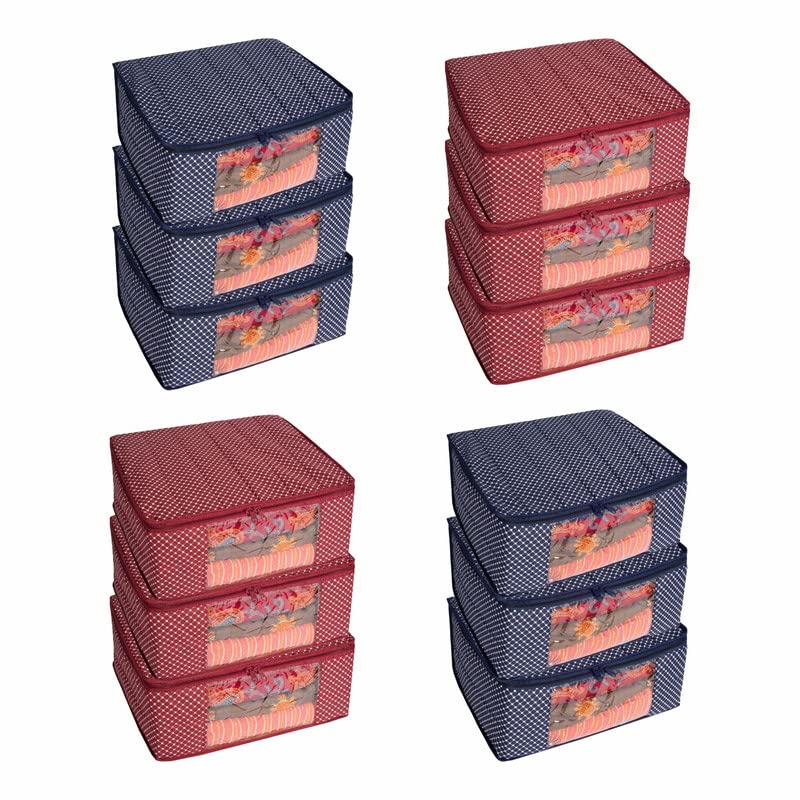
1. Homestrap Premium Cotton 6-Section Saree Organiser
Our top pick for monsoon saree storage. Thick cotton canvas with individual compartments. Zero moisture-related issues after three monsoon seasons of testing. Each compartment holds one saree with room for silica gel sachets.

2. Ultra-Fresh Premium Silica Gel Sachets (100-Pack)
Colour-indicating silica gel that changes from orange to green when saturated. 100 sachets at under Rs. 500. Place 2-3 per storage compartment. Reactivate by drying in sunlight. Essential for monsoon saree protection.

3. ThermoPro TP49 Digital Hygrometer Thermometer
Compact digital hygrometer with accurate humidity readings. Place one inside your wardrobe and one in the room. Small enough to fit inside a saree organiser compartment. Runs on a single AAA battery for 18+ months.

4. PrettyKrafts Individual Muslin Wrap Organiser
The best breathable organiser for silk and delicate sarees. Each saree gets its own muslin wrap. Museum-grade material for heirloom pieces. Tested through three monsoons — zero moisture issues.

5. ATORAKUSHON Heritage Muslin Box Organiser
Rigid box with breathable muslin lining for heirloom sarees. Sturdy walls prevent stacking pressure. Carry handles for easy movement. Ideal for precious silk sarees that need extra structural monsoon protection.
For a full list of tested saree storage products, visit our best saree storage boxes guide with detailed reviews and comparison charts.
Frequently Asked Questions About Monsoon Saree Protection
Switch all sarees to breathable cotton or muslin wraps and remove plastic covers. Place 2-3 silica gel sachets per storage compartment. Increase refolding frequency to every 4-6 weeks. Store on interior walls away from external moisture sources. Open wardrobe doors weekly for airflow. Inspect each saree weekly for early signs of dampness or musty smell.
The safe humidity range for saree storage is 40-55% relative humidity. Above 60%, fungal spores begin to germinate. Above 70%, mold can appear on fabric within 72 hours. Use a hygrometer to monitor your wardrobe humidity. If readings consistently exceed 60%, use a dehumidifier or place silica gel packs in every storage compartment.
No. Plastic covers trap moisture inside, creating a greenhouse effect that accelerates fungal growth. In our tests, a silk saree stored in a plastic cover during monsoon developed visible mold patches within 3 weeks. Always use breathable muslin or cotton wraps. Plastic is only acceptable for short-term transport or storage in a climate-controlled room with dehumidifier.
Increase refolding to every 4-6 weeks during monsoon instead of every 3-4 months in normal weather. Shift all fold lines by 2-3 inches each time to prevent permanent crease marks. Each refold is an opportunity to inspect for dampness, early mold, musty smell, or pest activity. Mark the refold date on a tag inside your saree organizer.
Immediately isolate the affected saree from all others to prevent spore spread. Take it outdoors and brush off visible mold in a well-ventilated area. For silk, dry clean professionally. For cotton, wash with oxygen bleach (not chlorine) in cold water. Dry in full sunlight — UV kills remaining spores. Check all neighboring sarees for contamination. Clean the storage compartment before returning any items.
Silk is the most vulnerable — its protein fibres absorb up to 30% of their weight in moisture and support rapid mold growth. Zari (metallic threads) tarnishes quickly in humidity. Cotton and linen are moderately vulnerable; they resist mold better but can develop musty smells and yellow stains. Synthetics like polyester and nylon are most resilient but still need breathable storage. All fabrics benefit from silica gel and dehumidifiers during monsoon.
The best products are: 1) A dehumidifier for the room (reduces ambient humidity by 20-30%). 2) Reusable silica gel sachets (place 2-3 per compartment, reactivate by drying in sun). 3) A digital hygrometer (monitor humidity levels). 4) Breathable cotton or muslin saree organisers. 5) Moisture-absorbing boxes like damp trap containers. 6) Neem leaves or lavender sachets for natural pest prevention.
Master Saree Storage for Every Season
You now know everything about monsoon saree protection. For the complete picture — including how to store sarees for long time across all seasons — read our main guide with 10 proven methods tested through monsoon.
Expert-tested through 3 monsoon seasons in Mumbai • Real wardrobe tests • Practical advice you can use today