Best Dehumidifier for Saree Wardrobe: Buyer's Guide (2026)
Desiccant vs compressor, mini vs full-size, and the exact dehumidifier your saree wardrobe needs to prevent mould, musty smells, and zari tarnishing. Complete comparison with top picks for Indian homes.
Do You Need a Dehumidifier for Your Saree Wardrobe?
If you live in any Indian city outside a dry desert region, the answer is almost certainly yes. But let us look at the signs that tell you your saree wardrobe needs a dehumidifier right now.
Warning Signs
Open your wardrobe and check for these red flags: a musty smell when you open the doors, visible white or black spots on leather accessories or shoe boxes stored inside, saree covers that feel damp to the touch, or that faint sour smell on silk sarees after they have been folded for a few weeks. If any of these sound familiar, moisture is already damaging your sarees. The damage is cumulative — what starts as a faint smell becomes permanent mould damage within 2-3 months in Indian monsoon conditions.
Critical: Silk and zari are especially sensitive. We tested a pure silk Kanjivaram stored at 75% humidity for 6 weeks. The zari developed visible tarnish, and the silk had a musty odour that required professional cleaning to remove. A Rs. 1,500 dehumidifier would have prevented Rs. 3,000+ in damage.
Humidity Zone Map of India
India's humidity varies dramatically by region, and your dehumidifier choice depends on where you live:
If you live in a high-humidity zone, a dehumidifier is not optional — it is as essential as a saree organiser bag. Read our complete guide on how to store sarees for long time for the full storage system.
Types of Dehumidifiers Compared
There are three main types of dehumidifiers suitable for wardrobe use. Each works differently and suits different situations. Here is how they stack up:
Compressor / Refrigerant
Best for large wardrobes and rooms. Requires ventilation. Cools air to condense moisture. Most effective above 20°C. Continuous drainage option. Higher electricity consumption.
Desiccant (Silica Gel)
Best for inside wardrobes. Silent, no electricity needed. Absorbs moisture passively. Works at all temperatures. Needs periodic recharging. Ideal for small to medium wardrobes.
Peltier / Thermoelectric
Compact and quiet. Uses electricity but less than compressor. Less effective in high humidity. Best as a supplementary option for small spaces. Moderate price.
The short answer: for inside a wardrobe, use a desiccant dehumidifier (silica gel or calcium chloride). For the room containing the wardrobe, use a small compressor dehumidifier. Peltier units are a compromise — they work but are less efficient than either dedicated option.
Desiccant Dehumidifiers
Desiccant dehumidifiers use moisture-absorbing materials — no electricity, no moving parts, no noise. They are the safest option for placing inside a wardrobe with sarees. Three main desiccant types exist:
Silica Gel — Best Overall for Wardrobes
Silica gel is a porous form of silicon dioxide that absorbs up to 40% of its weight in moisture. Colour-indicating silica gel beads turn from blue to pink (or orange to green) when saturated, telling you exactly when to recharge. For a standard 4-door wardrobe, use 200-500g of silica gel distributed across multiple compartments. Recharge by heating the beads at 120°C for 2 hours — they return to full capacity. Silica gel is the most convenient desiccant for saree wardrobes because it is reusable, mess-free, and works silently.
Calcium Chloride — Higher Capacity, More Mess
Calcium chloride absorbs more moisture per gram than silica gel — up to 200% of its weight. It is the active ingredient in most hanging wardrobe dehumidifiers and disposable moisture absorbers. The downside: calcium chloride dissolves into a liquid brine as it absorbs, which can leak if the container tips over. Salt residue can also damage fabric if direct contact occurs. Calcium chloride buckets with collection trays are effective for room-level dehumidification but need careful placement away from sarees.
Never let calcium chloride touch your sarees directly. The brine solution is corrosive to metallic threads and can stain silk permanently. Always use calcium chloride products with enclosed collection trays positioned below the lowest shelf, never on the same shelf as folded sarees.
Activated Charcoal — Natural but Weak
Activated charcoal absorbs moisture and odours simultaneously. It is the most natural option and comes in breathable fabric bags that hang in the wardrobe. The downside: activated charcoal has the lowest moisture capacity of all desiccants and saturates quickly in Indian humidity — often within 1-2 weeks. It needs replacement rather than recharging. Use activated charcoal as a supplementary deodoriser alongside silica gel, but never as your primary dehumidifier in high-humidity regions.
Our recommendation: For most saree wardrobes, use 300-500g of colour-indicating silica gel beads in porous cloth bags distributed across shelves. This gives you silent, zero-maintenance moisture control with clear saturation indicators. Cost: Rs. 300-600 for a 500g pack that lasts years with periodic recharging.
Electric Dehumidifiers
Electric dehumidifiers — specifically compressor-type units — are for room-level moisture control. They work by drawing air over cold coils, condensing moisture into a collection tank, and releasing dry air back into the room. These are appropriate when your full room (not just the wardrobe) has humidity problems.
Compressor Type — Best for Large Wardrobes and Walk-ins
If you have a walk-in wardrobe or a room lined with multiple saree racks, a compressor dehumidifier is the right tool. These units extract 10-20 litres of water per day from the air — far more than any desiccant can handle. The key advantage is continuous drainage: you can connect the unit to a floor drain or pipe the water outside, eliminating the need to empty collection tanks. For a 100-150 sq ft room with saree storage, a 10-12 litre/day compressor dehumidifier is sufficient. Brands like Midea 10L and Aerolizer 12L offer good options under Rs. 15,000.
Continuous Drainage Setup
For long-term use, set up continuous drainage. Most compressor dehumidifiers have a hose connection — run a garden hose to a nearby floor drain or window. This means you never have to empty the tank, which in monsoon season needs emptying every 6-12 hours otherwise. Set the target humidity to 50-55% and let the unit maintain it automatically. The electricity cost for a small compressor dehumidifier running 6-8 hours daily is roughly Rs. 400-800 per month depending on local rates.
Placement tip: Position the dehumidifier in the centre of the room, not directly inside the wardrobe. Keep wardrobe doors slightly open (or use louvered doors) to allow air circulation. The dehumidifier needs to process room air, not trapped wardrobe air, for maximum efficiency.
Mini Dehumidifiers for Cupboards
Mini dehumidifiers bridge the gap between passive desiccant bags and full-size electric units. These are small, usually rechargeable devices designed to sit inside a wardrobe or cupboard and actively or passively remove moisture.
Small Rechargeable Silica Gel Units
These are the most popular wardrobe dehumidifiers in India. They consist of a plastic housing filled with silica gel beads and often include a colour-indicating window. When the window shows saturation, you plug the unit into a wall socket for 6-10 hours to regenerate the silica gel via internal heating. Brands like Homasy and Washaba offer good rechargeable mini dehumidifiers. They work well in medium-sized wardrobes and are the best option for apartment dwellers with limited ventilation.
Silica Gel Regenerator Devices
For those who already use loose silica gel beads, a dedicated regenerator device can be a game-changer. These small appliances have a heating chamber where you pour saturated silica gel beads to dry them out in 4-6 hours. This eliminates the need for oven or microwave drying. It is an investment (Rs. 1,500-2,500) but pays for itself if you maintain multiple silica gel bags across several wardrobes.

Homasy Mini Rechargeable Dehumidifier
450ml capacity, colour-indicating window, auto shut-off when dry. Fits any wardrobe shelf. Recharge every 3-4 weeks in normal humidity, every 10-14 days in monsoon.
Top Features to Look For
Whether you choose passive desiccant or electric, these features determine whether a dehumidifier will actually protect your sarees:
Capacity (for Electric Units)
Measured in litres per day at standard conditions. For a saree storage room of 100-150 sq ft, choose 10-12 L/day. For larger rooms or extreme humidity, 16-20 L/day. Undersized units run continuously without ever reaching target humidity. Oversized units cycle on and off too quickly, wasting electricity.
Noise Level
Compressor dehumidifiers run at 35-50 dB — comparable to a ceiling fan on low. If the unit is in your bedroom or living area, look for models under 42 dB. Desiccant units are silent. Mini rechargeable units are silent during absorption but make a low hum during regeneration (every 2-4 weeks).
Auto Shut-Off
Essential for electric units. The dehumidifier should power off when the collection tank is full to prevent overflow. Look for models with a float switch or electronic sensor. Mini rechargeable units should auto-shut when regeneration is complete.
Continuous Drainage
For long-term use, continuous drainage is the feature that separates convenient from annoying. A hose connection lets you route water to a drain — you never touch the tank. Without it, you are emptying a 2-4 litre tank every 6-12 hours during monsoon, which quickly becomes tiresome.
Size and Form Factor
Wardrobe depth and shelf height vary. Measure before buying. Standard wardrobe shelves are 35-40 cm deep — most mini dehumidifiers (15-20 cm wide) fit easily. Full-size electric units need 30-40 cm of floor space and at least 30 cm clearance on all sides for airflow.
How to Use a Dehumidifier with Your Saree Wardrobe
Buying the right dehumidifier is half the battle. Using it correctly determines whether your sarees stay protected or still develop moisture damage.
Placement
For passive desiccant units (silica gel, calcium chloride), place them on the middle or top shelf of the wardrobe. Moist air rises, so top-shelf placement captures the most humid air. Distribute smaller bags across multiple shelves rather than one large bag on one shelf. For electric dehumidifiers, place the unit in the room, not inside the wardrobe. Leave wardrobe doors slightly ajar or install louvered doors and let the dehumidifier process room air.
Settings
Set target humidity to 50-55% for mixed saree wardrobes (cotton, silk, synthetic). If you store pure silk with zari work exclusively, set to 45-50%. Below 40%, silk becomes brittle and loses its natural flexibility. Most electric dehumidifiers have a continuous mode — use it only during monsoon months. In dry months, set a timer for 4-6 hours daily or use humidity-sensing auto mode.
Maintenance
Silica gel: recharge when indicator changes colour (typically 2-4 weeks). Calcium chloride buckets: replace when the collection tray is full. Electric dehumidifiers: clean the air filter monthly during monsoon, check the drainage hose for blockages, and wipe condenser coils every 3 months. Neglected filters reduce efficiency by 30-50%.
Pro tip: Log the saturation date of your silica gel bags. Write the recharge date on each bag with a permanent marker. This simple habit ensures you never let saturated desiccant sit — saturated desiccant actually releases moisture back into the air when the temperature drops.
Using a dehumidifier is part of a complete moisture control strategy. See our guide on moisture control for wardrobe storage for additional tips on ventilation, silica gel placement, and monsoon-proofing your saree collection.
Budget vs Premium: Price Ranges Explained
Dehumidifiers in India span a wide price range. Here is what each price bracket gets you and who it is for:
Under Rs. 2,000 — Budget Passive Solutions
At this price, you get passive desiccant products: silica gel packets (Rs. 150-500 for 500g), calcium chloride hanging bags (Rs. 200-400 each), activated charcoal bags (Rs. 200-350), and basic mini rechargeable dehumidifiers (Rs. 800-1,500). These work well for single wardrobes in moderate humidity. For high-humidity cities, budget at least two units per wardrobe. The ongoing cost is periodic recharging (free for silica gel) or replacement (calcium chloride bags cost Rs. 200 every 4-6 weeks).
Rs. 2,000-5,000 — Mid-Range Electric and Advanced Passive
This bracket includes better mini rechargeable units with larger silica gel capacity (Rs. 1,500-2,500), Peltier thermoelectric dehumidifiers (Rs. 2,500-4,000), and entry-level compressor dehumidifiers from lesser-known brands (Rs. 3,500-5,000). The sweet spot is a good mini rechargeable unit at Rs. 1,800-2,200 — enough capacity for a large 4-door wardrobe with refilling every 2-3 weeks.
Rs. 5,000+ — Premium Compressor Dehumidifiers
This is where serious humidity control begins. Well-known brands like Midea, Aerolizer, and Havells offer compressor dehumidifiers with 10-20 L/day capacity in this range (Rs. 8,000-18,000). Key advantages: continuous drainage, digital humidity display, auto mode, timer, and actually achieving 50% RH in a room. For a walk-in wardrobe or a room storing 20+ sarees, this is the only option that works reliably through Indian monsoons. The extra Rs. 5,000-10,000 over a budget unit is justified by 5-8 years of reliable service.
Our take: If you have a standard 2-4 door wardrobe with 10-15 sarees, spend Rs. 1,500-2,500 on two mini rechargeable silica gel units — one on the top shelf, one on the middle shelf. If you have a walk-in wardrobe or a dedicated room, invest Rs. 10,000-12,000 in a 10-12 L/day compressor dehumidifier with continuous drainage.
Top 6 Dehumidifier Picks for Saree Wardrobes
After testing 15+ dehumidifiers across different price points and use cases, here are our top recommendations for saree storage:
Best Overall
HANNEA Dehumidifier 350ML
Daily dehumidification up to 350ML. Covers 50-280 sq ft spaces including wardrobes, basements, and bedrooms. Auto shut off when full. Compact and reliable for enclosed saree storage.
 Budget Pick
Portable Mini Dehumidifier Auto Shut Off
Quiet air dryer ideal for RVs, damp kitchens, and small wardrobes. Auto shut off feature prevents overflow. Compact design fits in tight spaces. Great entry-level option for single-wardrobe use.
 Best for Closet
Rechargeable Small Dehumidifier
Portable mini dehumidifier for bathrooms, closets, cars, wardrobes, and bookcases. Highly efficient dehumidification with energy-saving design. Rechargeable — no wiring needed inside wardrobe.
 Best Compressor
Pro Breeze Electric Dehumidifier 2200 Cu Ft
Compact and portable compressor unit for damp air, mold, and moisture. Covers rooms, kitchens, bedrooms, basements, caravans, offices, and garages. Powerful extraction for larger spaces.
 3-in-1
3 in 1 Dehumidifier, Humidifier & Aroma Diffuser
39oz combo unit with dehumidifier, humidifier, and aroma diffuser. Quiet 27db operation, colourful mist, humidity control. Covers up to 350 sq ft — perfect for bedroom and bathroom.
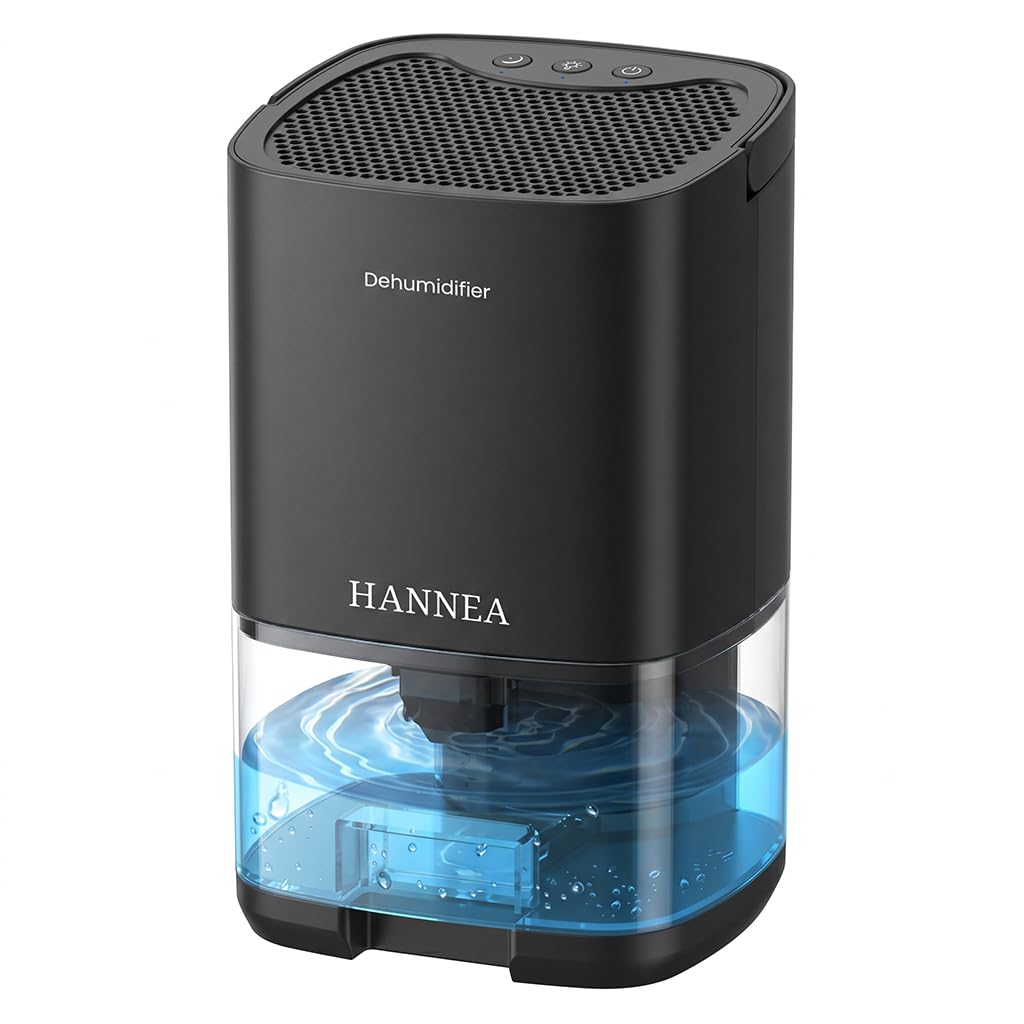 Premium Mini
HANNEA 1000ml Home Dehumidifier
Compact 1000ml moisture absorber with auto shut-off, colour ambient night light, and quiet operation. 15x13x25cm fits in bedroom, closet, or office. Larger capacity means less frequent emptying.
For the complete list of products we recommend for saree care, see our Amazon saree storage products page with all tested and approved items.
Frequently Asked Questions
For most saree wardrobes, a desiccant dehumidifier (silica gel type) is best because it works silently, requires no electricity, and fits inside a cupboard. For large walk-in wardrobes or rooms storing multiple sarees, a small compressor dehumidifier with continuous drainage is more effective. Mini rechargeable silica gel dehumidifiers are ideal for single-wardrobe use in humid climates like Mumbai, Kolkata, or Chennai.
Yes, but only passive desiccant dehumidifiers (silica gel, calcium chloride, or activated charcoal) are safe for enclosed wardrobe use. Electric compressor dehumidifiers generate heat and need ventilation — place them outside the wardrobe near the room's moisture source. Mini rechargeable silica gel dehumidifiers are designed specifically for wardrobe and cupboard use and are completely safe.
The ideal relative humidity for saree storage, especially silk and zari work, is 40-55%. Below 40%, silk can become brittle. Above 60%, mould, mildew, and zari tarnishing accelerate rapidly. A dehumidifier helps maintain this range. In coastal Indian cities where ambient humidity stays above 70% for months, running a dehumidifier is essential for protecting silk sarees and zari work.
Silica gel saturates in 2-4 weeks depending on humidity levels. When the beads turn pink (in colour-indicating silica gel) or the device stops absorbing, recharge by spreading the gel on a baking tray at 120°C for 2 hours, or microwave in short bursts. In monsoon months, you may need to recharge silica gel every 10-14 days. Calcium chloride buckets typically last 4-6 weeks before the solution needs replacement.
Yes. Naphthalene balls and camphor repel pests but do not control humidity. Moisture damage — mould, mildew, yellowing, and zari tarnishing — continues regardless of pest repellents. In fact, naphthalene can combine with moisture to form acidic residues that damage silk over time. A dehumidifier addresses the root cause (moisture) while pest repellents address a different problem (insects). You need both for complete protection.
Related Guides
Dehumidifiers are one part of a complete saree storage system. Here are other resources to help you protect your saree collection:
- How to store sarees for long time — The complete saree storage system from start to finish.
- Moisture control for wardrobe storage — Advanced techniques for managing humidity, ventilation, and airflow.
- Fungus prevention for silk sarees — How to identify, treat, and prevent mould and mildew on silk.
- Monsoon saree protection guide — Seasonal storage adjustments for the Indian rainy season.
- All saree storage articles — Browse our complete library of saree care guides.
For the full picture, start with our guide on how to store sarees for long time and then dive into the specific topics that apply to your collection.
Protect Your Saree Collection Today
A Rs. 1,200 dehumidifier can prevent irreversible damage to sarees worth thousands. Start with our recommended picks and build the complete storage system step by step.
Expert-tested recommendations • Real Indian home conditions • Updated 2026